
You're standing at the front door on the first morning, pram packed, work bag over one shoulder, and your baby's daycare bag open on the floor because you're not quite sure if you've missed something. A nappy leaks, milk warms up on the drive, or the spare bodysuit is two sizes too small, and a calm drop-off turns rushed for you and for educators.
A good infant daycare packing list isn't a pile of supplies. It's a daily system that connects quantities, labelling, hygiene, safe sleep, feeding storage, weather preparation, and what comes home again at pick-up. When each item has a place and a purpose, educators can find what your baby needs quickly, and you can reset the bag in minutes at night.
Before the first day, ask your centre for its current policies. Feeding, sun protection, comfort items, sleep gear, and medication rules can differ between services, and some centres supply nappies, wipes, or sunscreen themselves. The eight essentials below cover what to pack, how much to provide, how to label it, and what to check at both drop-off and pick-up, so your first weeks feel steady rather than improvised.
1. Labelled Spare Clothing Set
Pack two to three complete sets in a labelled zip bag, and treat that bag as a rotating stock, not a permanent fixture. Each set should include a singlet or bodysuit, pants, socks, and a jumper or jacket suited to the season. Melbourne weather can shift between drop-off and outdoor play, so layering pieces matter more than one heavy outfit.
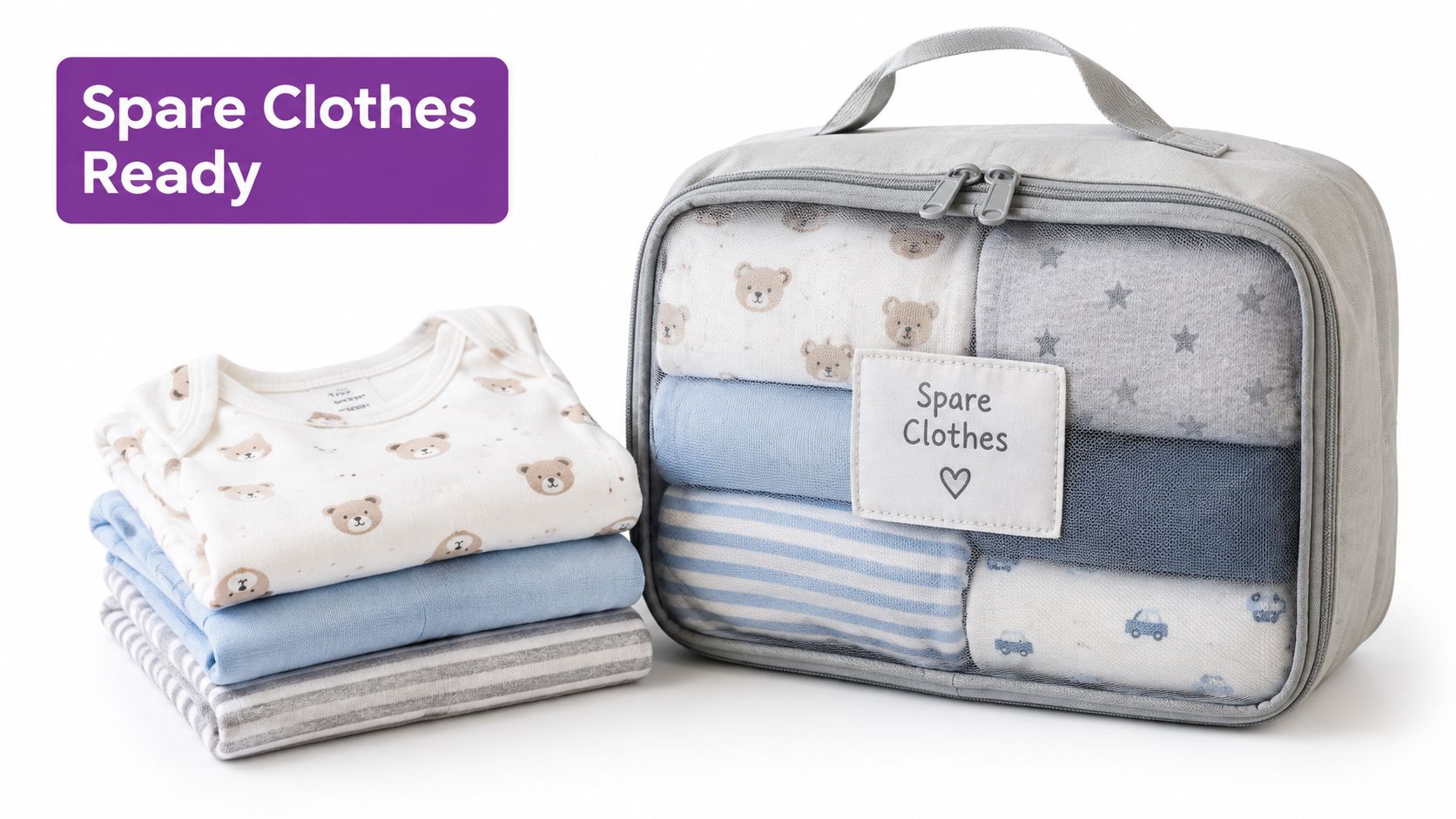
A parent heading out on a rainy Dandenong North morning might add a waterproof jacket and an extra pair of socks to the usual three sets. Later that day, an educator can change an infant straight after a messy food session, rather than leaving her damp and chilled while someone phones home. That speed is the point. Spit-up, nappy leaks, paint, sand, and water play don't wait for a spare outfit to arrive.
How to Keep the Spare Bag Usable
- Label everything: Use a permanent fabric marker or iron-on labels on bodysuits, socks, bibs, and jumpers, because identical infant clothing disappears quickly in a busy room.
- Refresh for fit: Check sizes every few weeks and swap out anything that's become tight, since babies outgrow spare sets that sit untouched in a locker.
- Add a sleep layer in winter: Include an extra sleep suit or warm change for naps on cold days, if your centre permits it.
- Confirm the return system: Ask how soiled clothing comes home, ideally sealed and separate from clean items each evening.
Check your centre's clothing policy before you buy extras, as some services ask for specific sun-safe pieces or covered shoulders for outdoor play. Families comparing care options can see how one local service structures its day care for infants in Melbourne and what families are asked to supply. When you unpack at night, replace used sets immediately. A spare bag that's restocked the same evening is the only kind that works.
2. Nappies, Wipes, and Barrier Cream
Start by confirming who supplies what. Some infant rooms provide nappies and wipes as part of the service, while others ask families to send a daily or weekly supply in their child's size and preferred brand. Fit and nappy type affect comfort and skin, so don't assume a generic supply will suit your baby until you've asked.
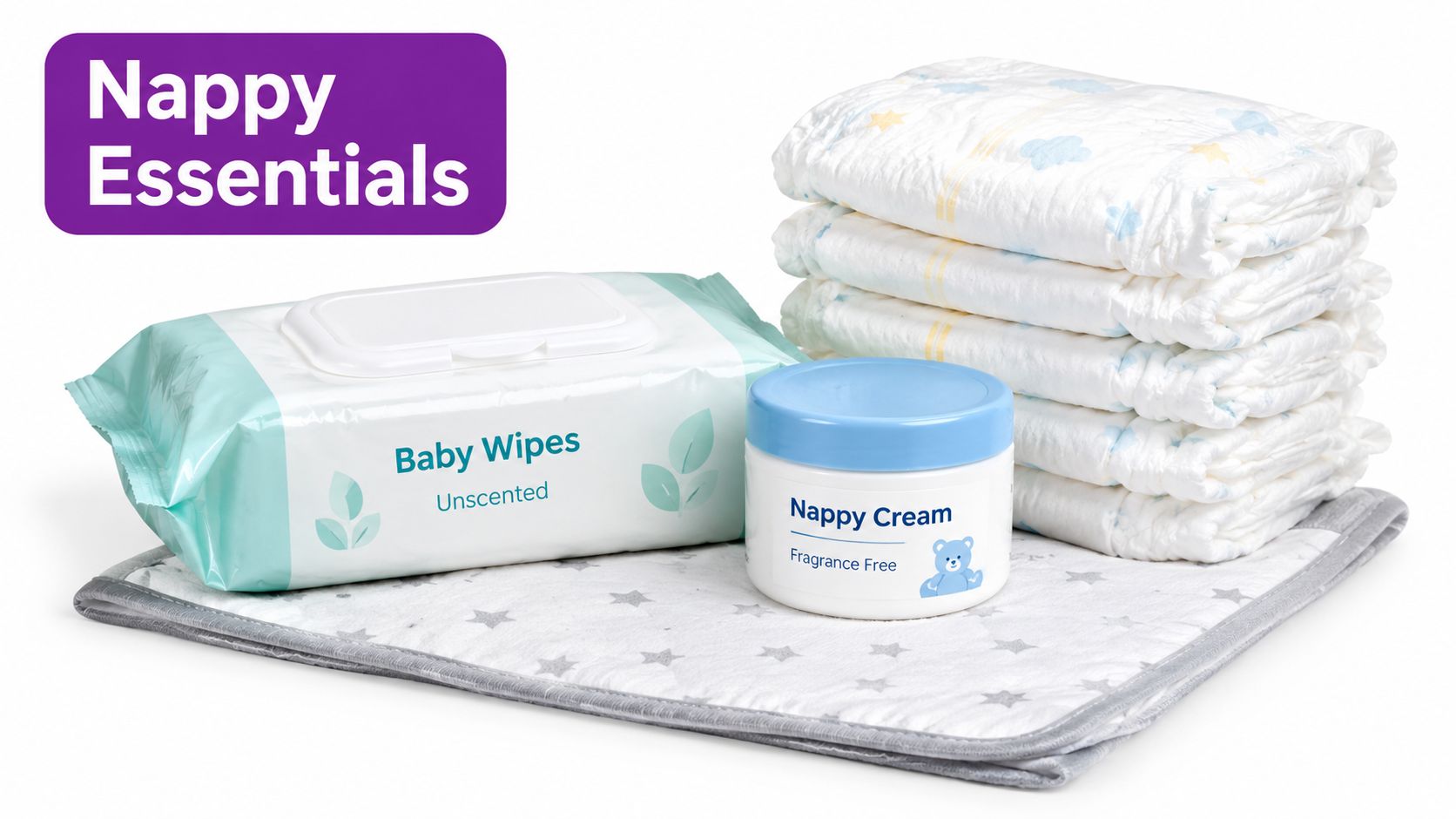
If you're supplying them, a practical routine is sending a week's worth of nappies on Monday, plus a labelled tub of barrier cream and a pack of unscented wipes. Educators typically record changes on the daily sheet, which gives you a clear signal when stock is running low. Sending a bulk supply weekly beats counting individual nappies into a bag every morning when you're already rushed.
Pack one or two more nappies than usual for long or unpredictable days, especially during teething, illness recovery, or a change in feeding routine when output can shift. If you use cloth nappies, include a dedicated wet bag that goes home daily, and confirm the centre is set up to store used cloth nappies separately from disposables.
Skin Care Details Worth Sharing
Send creams in a clearly labelled container with your child's name, and note any allergies or sensitivities on enrolment forms before the first day. If your baby has eczema or persistent nappy rash, tell educators what you've been using at home and what seems to help.
Practical rule: If a cream needs explaining, write the instruction down and hand it over, don't rely on a rushed verbal message at the door.
Unscented wipes are the safer default for young or reactive skin, and they're less likely to clash with a centre's own hygiene products. Restock cream when the tub runs low rather than waiting for it to empty, because a missed day of barrier protection on already sore skin can set healing back.
3. Labelled Feeding Bottles, Formula, and Expressed Breast Milk
Feeding is where your infant daycare packing list needs to be individual, not generic. In 2022, 90.6% of Australian children aged 0 to 3 years had received breast milk at some point, while 37.5% were exclusively breastfed to six months and 64.2% were introduced to solid foods at six months or later, according to the Australian Bureau of Statistics breastfeeding release. Your baby might need expressed milk, formula, solids, or a changing mix of all three.
The bottles below show the kind of clearly separated, labelled supply that makes handover straightforward.
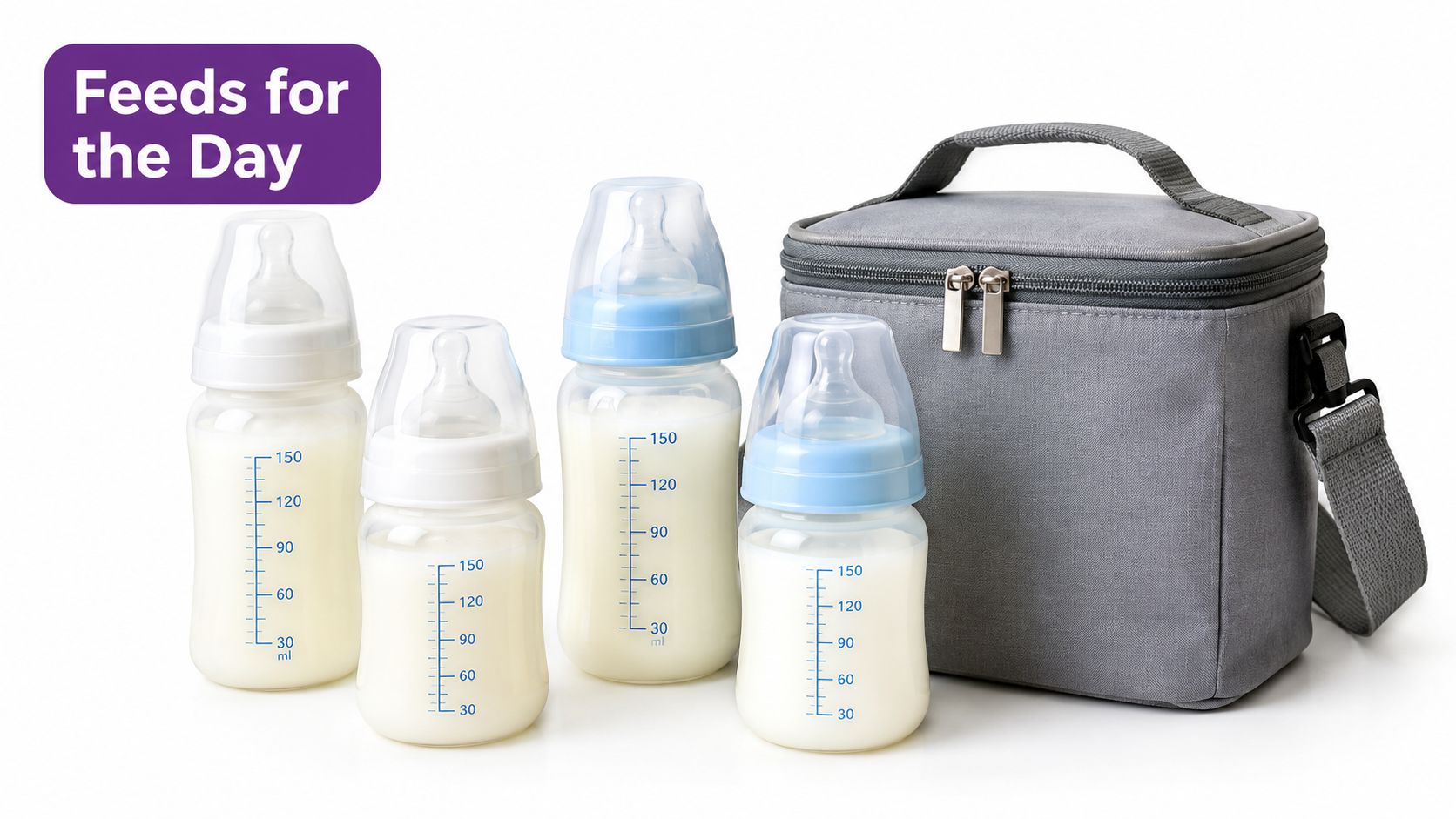
Australia's Department of Health advises transporting breastmilk in sterilised plastic bottles inside an insulated container, labelled with your child's name and intended use date, as set out in the Department of Health Get Up and Grow staff and carer book. Pack one labelled bottle per feed plus a contingency feed you've agreed with educators, and confirm the centre's receiving and refrigeration steps at drop-off. Unused milk brought from home should be returned or discarded at day's end, so sending far more than your baby drinks usually creates waste, not security.
Formula, Solids, and the Written Plan
For formula, supply sterilised bottles and teats plus pre-measured powder, labelled with your child's name, the date, and the required water volume. Don't send pre-mixed formula or frozen milk until you've confirmed the centre's approved preparation and storage procedure. A parent might place pre-measured powder in labelled containers beside two bottles of expressed milk in an insulated cooler, covering a full day without ambiguity.
This short video walks through preparing and organising bottles for a day in care, which is useful to watch before your first week.
Add a written feeding plan covering quantities, timing, feeding cues, preferred temperature, and whether your child uses a teat or cup. As solids begin around six months, note newly introduced foods and tolerances, and update the plan whenever appetite, routine, or method changes.
4. Safe Sleep Wrap or Sleeping Bag
A wearable sleeping bag does a job loose bedding can't. It keeps your baby warm without fabric rising over the face, and it creates a familiar cue that sleep is coming, even in a new room with different sounds. For many infants, that consistency between home and care helps settling more than any extra comfort item you could add.
Choose a bag with a fitted neck and armholes, no hood, no ties, and no loose fabric that could bunch around the face. Match the tog rating to the room temperature rather than layering blankets over the top. A family might send a labelled lightweight bag for a six-month-old in summer, then rotate in a warmer option when mornings turn cold, keeping both at the centre during changeable weeks if storage allows.
Fit Checks That Matter
- Check the neck opening: Your baby's head shouldn't be able to slip down inside the bag, and the fit should stay snug as they grow.
- Review monthly: Growth changes fit quickly in the first year, so reassess size at least monthly and replace the bag when it's tight or too roomy.
- Keep the cot clear: Pillows, bumpers, and soft toys don't belong in the sleep space, whatever your routine looks like at home.
- Ask about supply: Some centres provide sleep bags and launder them on site, while others ask families to send and wash their own.
Red Nose safe sleep guidance, as reflected in centre sleep policies, centres on placing infants on their back on a firm, flat mattress in a clear cot. An educator who checks the bag's fit and clears the cot before settling your baby is applying that guidance, not being fussy. If your baby uses a dummy for sleep, send spares and ask how the centre handles them, because policies on dummies and wraps vary. Share your settling routine in writing too, including timing cues and what usually works when your baby is overtired, so educators aren't guessing during the first fortnight.
5. Sun Protection With Hat Sunscreen and Permission Form
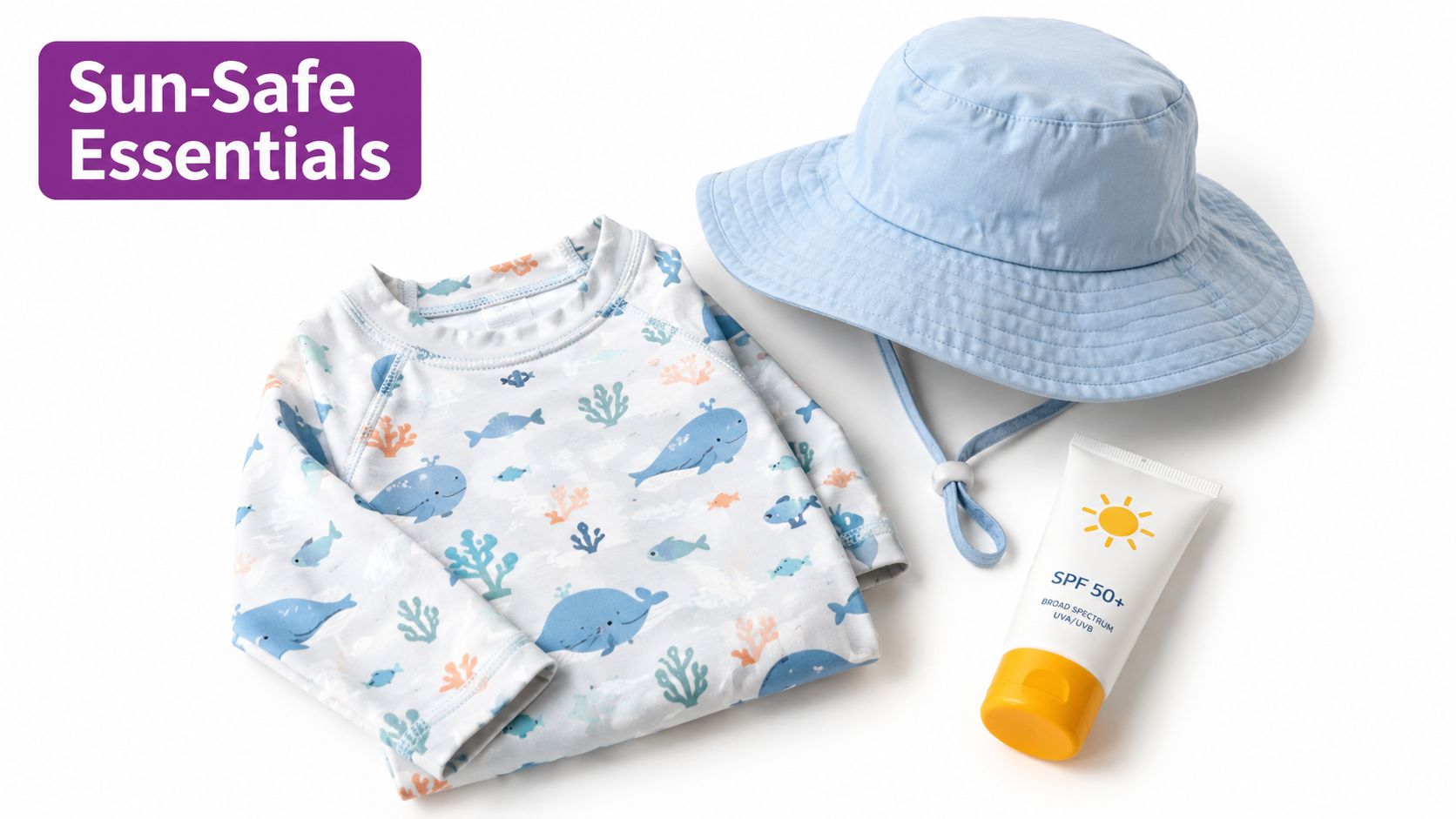
Outdoor play is part of the day in most infant rooms, even for babies who aren't yet crawling, so sun protection belongs on your list from the first week. Pack a labelled wide-brimmed hat that shades the face, neck, and ears, plus lightweight long-sleeved clothing for exposed skin. A hat that stays on matters more than one that looks good in the bag, so test the fit and chin strap at home first.
Shade, clothing, and hats are the first line of protection, with broad-spectrum sunscreen used on exposed areas for older infants. Babies under six months should be kept out of direct sun, which means educators will rely on shade and clothing rather than sunscreen for the youngest infants. A family might pack a long-sleeved sun suit and wide-brimmed hat for summer outdoor play, giving educators coverage options before sunscreen is even considered.
Permissions and Reapplication
Complete the sunscreen permission form before your first day, and note any allergies or skin conditions on it. Check whether your centre supplies sunscreen or expects families to send a labelled tube, because both systems are common. If you're supplying it, write your child's name on the tube and replace it before the expiry date passes.
Ask about reapplication schedules, particularly on hot or windy days when morning sunscreen won't last through afternoon outdoor play. An educator applying sunscreen before going outside and recording it on the daily log gives you a record you can check at pick-up, which is reassuring if your baby has fair or reactive skin.
Label sunglasses too if you send them, and choose a soft strap style that won't press into your baby's head during floor play. Services outline these expectations in their program information, and parents can review how outdoor routines fit within infant and toddler programs in Melbourne before enrolling. Review your sun supplies at the start of each season, because last summer's hat rarely fits this summer's head.
6. Comfort Item and Familiar Soft Toy
The first drop-off is often harder at the door than it is ten minutes later, and a familiar object can bridge that gap. A muslin that smells like home, a small soft toy, or a worn comfort cloth gives your baby something recognisable while educators and the room are still new. One parent might send a labelled muslin used during home feeds, which an educator then keeps close during the child's first morning settling period.
Choose something durable, washable, and free of small parts such as button eyes, ribbons, or detachable pieces. If your child depends on one particular item, buy or prepare a spare early, before the original is lost or left in the wash on a Monday morning. Label it clearly, because comfort toys travel around rooms and into other children's hands.
Settling Cues Educators Can Actually Use
Tell educators what helps beyond the object itself. A particular song, a rocking rhythm, being held upright after a feed, or a few minutes of quiet floor time can matter as much as the toy. Write down two or three cues that reliably work at home, and update them as your baby's preferences change, because what settles a four-month-old often stops working by eight months.
A comfort item works best when educators know when your child reaches for it, not just that it exists in the bag.
Ask about the centre's policy on comfort items in cots during sleep, since many services allow them for transitions and awake settling but remove them from the sleep space. That distinction protects safe sleep while still giving your baby support during arrivals, room changes, and tired moments before a nap. Send the item consistently during the first few weeks rather than only on difficult mornings, so it becomes part of the routine instead of a signal that something is wrong. Wash it on weekends and rotate the spare in, so hygiene doesn't become an afterthought.
7. Labelled Wet Bag and Drawstring Bag
Your bag system determines whether pick-up takes thirty seconds or five minutes of digging. Use a drawstring backpack or tote as the outer bag, with a separate sealed wet bag inside for soiled clothing, used bibs, and cloth nappies. Keeping dirty items contained and away from clean clothes, bottles, and food is a hygiene issue, not just an organisation preference.
Raising Children Network guidance reflected in Australian practice recommends labelling every item and packing refrigerated food or breastmilk in an insulated esky or cooler bag with a freezer pack, then placing it in the service refrigerator immediately on arrival, an approach also covered in the Australian Government Get Up and Grow lunchbox guidance. That means your outer bag and your cooler bag do different jobs. Don't merge them into one unchilled tote, particularly during warmer Melbourne travel periods when milk sits in a hot car.
A Daily Reset That Takes Minutes
A family using a drawstring backpack with a labelled wet bag can run the same check every night. Empty the wet bag into the wash, wipe or rinse it, and hang it to dry so odours don't build up. Replace used clothes, check nappy stock if you supply it, and put the clean wet bag back in the same pocket.
At pick-up, an educator who prompts you to check the wet bag is helping that system work, because soiled clothing left sealed over a weekend is unpleasant and harder to clean. Choose a wet bag that's waterproof and easy to wipe clean, with a zip or secure closure rather than an open pouch. Label the bag itself as well as the items inside it.
Keep food and drink in a separate compartment or cooler, never loose beside the wet bag. Flexible care hours make this reset habit even more valuable, since changing start times leave less room for morning repacking. A bag that's reset nightly works whatever time you leave.
8. Enrolment Documents With Immunisation History Medication Authorisation and Emergency Contacts
Paperwork is part of your packing system, even though it doesn't go in the bag each morning. Victorian early childhood guidance states that enrolment information should identify diagnosed medical conditions, allergies, and anaphylaxis risks, and that children with health care needs require a medical management plan, as detailed in the Victorian management of medical conditions policy and procedure. Without current documents, educators can't act quickly or lawfully when something goes wrong.
Before enrolment, download your child's immunisation history statement from myGov or the Australian Immunisation Register and provide it to the centre. Keep a copy at home as well, since you'll need it again if details are queried. Update emergency contacts and authorised collection persons whenever phone numbers, workplaces, or family arrangements change, not just at annual reviews.
Medication Is a Handover, Not a Bag Item
Prescribed medicines must be supplied in their original container with the original label showing your child's name, administration instructions, dose, method, and expiry date. Hand medication directly to the service through its approved process, with written authorisation completed, rather than leaving it in your child's bag where it's accessible and undocumented. Check the label and expiry before you leave home each time.
- Share plans early: Provide allergy, asthma, or anaphylaxis management plans before the first day, so educators can prepare storage and response steps.
- Report changes daily: Tell educators about recent medication, a fever overnight, or a new food reaction at drop-off, even if your child seems fine.
- Keep copies at home: Retain your own set of enrolment documents, authorisations, and plans for reference.
An educator following a written anaphylaxis action plan during a food reaction depends entirely on information you supplied weeks earlier. Families can review how one centre handles these requirements in its childcare policies and procedures before starting. Treat document updates as part of packing, triggered whenever health, feeding, or contact details change.
Infant Daycare Packing List: 8 Essential Items Compared
| Item | 🔄 Preparation Complexity | ⚡ Resources Required | 📊 Expected Outcome | ⭐ Key Advantage | 💡 Ideal Use Case |
|---|---|---|---|---|---|
| Labelled Spare Clothing Set | Low; pack and regularly check fit | 2–3 seasonal outfits, labelled bag, sealed bag for soiled items | Faster changes and improved comfort | Keeps infants dry and helps prevent lost clothing | Spills, nappy leaks, messy play, or changing weather |
| Nappies, Wipes, and Barrier Cream | Low to moderate; restock daily and follow centre policy | Correctly sized nappies, suitable wipes, labelled cream, wet bag | Timely changes and better skin care | Familiar products can reduce irritation and avoid supply gaps | Daily nappy changes and children with sensitive skin |
| Labelled Feeding Bottles, Formula, and Expressed Breast Milk | High; requires careful preparation, labelling, and safe transport | Clean bottles, feeds, labels, cooler bag and ice packs as needed | Supports feeding routines and safe handling | Maintains familiar feeding practices with clear instructions | Infants who need bottles during care |
| Safe Sleep Wrap or Sleeping Bag | Moderate; choose the right fit and season rating | Correctly sized, labelled wearable blanket | Warmth without loose bedding; supports a familiar sleep routine | Helps align comfort with safe-sleep practices | Rest times, subject to centre policy and safe-sleep guidance |
| Sun Protection: Hat, Sunscreen, and Permission Form | Moderate; requires suitable items and completed permission | Sun-safe hat, protective clothing, approved sunscreen and form | More consistent protection from UV exposure | Combines clothing, shade, and authorised sunscreen use | Outdoor play, especially during high-UV periods |
| Comfort Item and Familiar Soft Toy | Low; select a safe, washable item and label it | Small familiar toy, muslin, or other approved comfort item | May support settling and emotional security | Gives educators a familiar aid during transitions | Separation, settling-in periods, and rest routines |
| Labelled Wet Bag and Drawstring Bag | Low; label and establish a daily cleaning routine | Waterproof wet bag and carry bag or backpack | Better organisation and separation of clean and soiled items | Makes belongings easier to manage at drop-off and pick-up | Daily transport of clothing, nappies, and personal items |
| Enrolment Documents: Immunisation History, Medication Authorisation, and Emergency Contacts | Moderate to high; gather, complete, and update records | Immunisation statement, forms, medical plans, current contact details | Supports safe responses, accurate records, and enrolment requirements | Gives educators essential health and emergency information | Before enrolment and whenever medical or contact details change |
Build a Bag That Works Every Morning
The most useful infant daycare packing list is one you can maintain between two busy mornings, when you're tired and the routine has to carry you. A labelled bag with the right quantity of clothes, correctly stored milk, and current documents does more for your baby's day than an oversized bag packed with extras nobody asked for. More supplies aren't always better. Unlabelled bottles get discarded, excess milk comes home unused, and medication left in a bag instead of handed over properly creates risk rather than readiness.
Keep a restocking checklist beside the door or inside a kitchen cupboard, written for your child's current stage rather than copied from a generic template. A younger infant may need only milk, feeding equipment, nappies, and spare clothes, while an older baby adds solids, utensils, bibs, and a sun hat. Review that checklist monthly, because feeding methods, clothing sizes, sleep gear, and skin needs change faster in the first year than at almost any other stage.
Build your routine around two checkpoints. At drop-off, hand over the cooler bag for immediate refrigeration, pass on any medication through the centre's approved process, and mention changes in sleep, health, feeding, or mood. At pick-up, collect the wet bag and soiled items, check the daily sheet for feeds, changes, and rest, and note anything running low. Those few minutes of communication are where packing becomes care, because educators learn what your baby needs tomorrow from what happened today.
Your Nightly Reset
At home, empty and wash the wet bag, replace used clothing sets, and prepare labelled bottles or formula containers for the morning where your centre's policy allows. Pack food and milk last, straight from the refrigerator into an insulated bag with an ice brick, just before you leave. Check the forecast and swap in weather-appropriate layers, a warmer sleep bag, or sun protection as the week requires, rather than sending the same contents regardless of conditions.
Ask your centre's educators regularly which items they supply on site, which must come from home, and what emergency or medical information needs updating. Families attending a centre such as Kids Club Early Learning Centre can confirm those details directly with the infant room team, so nothing is duplicated or missed. A consistent, labelled, safety-checked routine protects your child's comfort, gives educators clear information to act on, and turns the morning rush into a sequence you can trust.
If you're preparing your baby's first bag and want clear guidance on what to supply, what the centre provides, and how infant rooms handle feeding, sleep, and medication handovers, Kids Club Early Learning Centre supports families across Springvale South, Dandenong North, and Ferntree Gully with care for children from six weeks old. Visit the centre, meet the educators, and ask for their current infant packing guidance before your first drop-off, so your first morning starts organised and calm.