
Signing a childcare centre's enrolment form doesn't automatically activate your Child Care Subsidy. That assumption is one of the easiest ways for working families to receive an unexpected full-fee invoice. Centre enrolment and government subsidy activation are separate administrative processes, and both must be completed before subsidised fees can flow correctly.
The centre needs accurate information to offer care safely and organise your child's place. Centrelink needs a separate claim, eligibility information and confirmation of the service's enrolment. Treating those as two connected tracks, rather than one form-filling exercise, makes the enrolment process much easier to manage.
The Hidden Gap in Childcare Enrolment
A completed centre application confirms that you've provided information to the provider. It doesn't, by itself, tell Centrelink that you want to claim the Child Care Subsidy, or confirm that you've accepted the enrolment notification in your Centrelink account.
The Australian Government's guidance on enrolling children in early childhood services makes this distinction clear. Parents need to lodge a CCS claim through Centrelink, meet the relevant care, residency and immunisation conditions, and then confirm the service's enrolment in their Centrelink account. The subsidy doesn't begin just because the centre has accepted your application.
Two systems, two responsibilities
The centre's enrolment process usually focuses on operational information such as:
- Child details: Name, date of birth, identity information and proposed start date.
- Attendance arrangements: Booked days, expected care pattern and collection arrangements.
- Family contacts: Parent or carer details, authorised pickup contacts and emergency information.
- Health and safety: Medical details, additional needs and required immunisation documentation.
- Legal information: Parenting orders or other documents that affect collection and communication.
Centrelink's process focuses on whether your family and care arrangement qualify for CCS. You'll need to lodge the claim, provide the requested information, and check your Centrelink account for the enrolment notification sent by the service.
Practical rule: Don't treat an accepted centre place as proof that your subsidy is active. Check the Centrelink side separately before your child's first booked day.
Preventing a full-fee surprise
The safest sequence is straightforward. Submit the centre's enrolment information, lodge your CCS claim before care begins, and then confirm the provider's enrolment notification in Centrelink. Keep a record of the booked days and care arrangement you agreed with the centre, because changes to those details can affect the way your claim is processed.
If your claim or confirmation is still incomplete when care starts, ask the centre how fees will be handled while the matter is being resolved. You may need to pay the full fee temporarily, so don't build your household budget around an assumed subsidy until Centrelink shows the enrolment as confirmed.
Victorian Kindergarten Age and Hour Rules
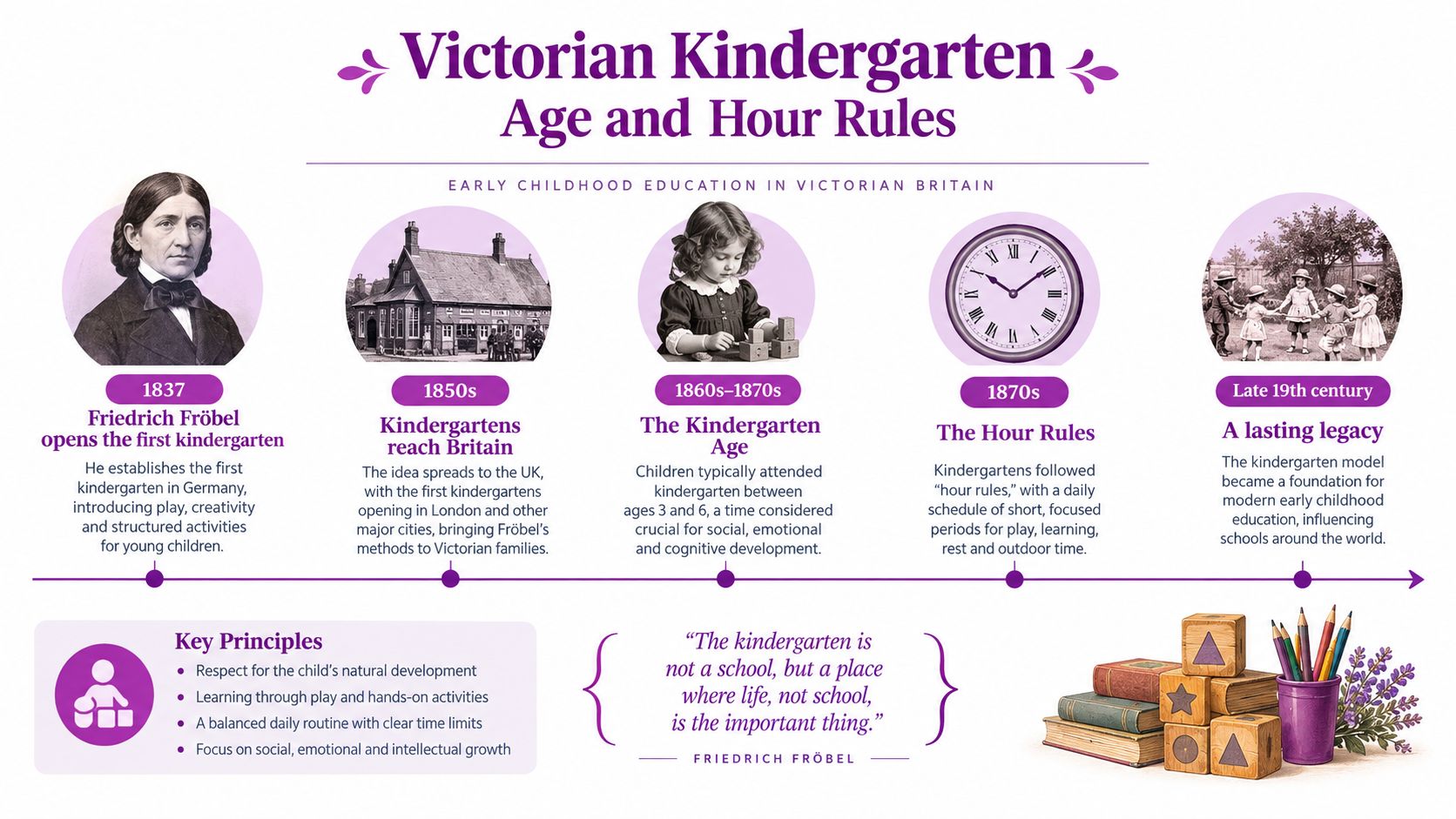
Victorian kindergarten eligibility depends on your child's exact age on 30 April in the year of participation, not the calendar year in which they turn three or four. That date should be the first checkpoint on your enrolment list.
Children who turn three on or before 30 April can apply for three-year-old kindergarten. Children who turn four on or before 30 April are eligible for a government-funded four-year-old kindergarten program from Term 1, subject to the applicable program and service arrangements. A child who turns four on or after 1 May will generally become eligible for the four-year-old program in the following year. These rules are outlined in the Victorian kindergarten information provided by Monash Valley City Council.
Check the date before choosing the program
Birthdays between January and April need particular attention. A child born in that period may need to have already turned three before starting three-year-old kindergarten, depending on their exact birthday and the commencement date. Don't rely on a general statement such as “my child turns three this year”. Write down the birth date, the participation year and the proposed starting term, then ask the local council or kindergarten service to confirm eligibility.
A child can't attend more than one state government-funded kindergarten program at the same time. That matters when a family is moving from one service to another, combining long day care with a separate kindergarten setting, or changing councils. Ask both services how the transition will be recorded before accepting a second funded place.
Funded hours affect your attendance plan
Funded Four-Year-Old Kindergarten generally requires at least 16 hours per week, or 640 hours per year, while funded Three-Year-Old Kindergarten generally requires between 5 and 15 hours per week, equivalent to 200 to 600 hours annually, depending on the program and applicable policy settings. See the Victorian operational policies supporting the Best Start, Best Life reforms for the relevant policy information.
Those minimums aren't just background figures. They affect the attendance pattern your family requests and may affect fee arrangements if you want fewer hours than the funded program requires. Discuss the pattern with the provider before finalising the enrolment form, particularly if work commitments, shared care or transport make certain days difficult.
For a plain-language explanation of the age question, parents can also review what age preschool usually covers. Use it as a starting point, then confirm the final decision with the relevant Victorian service or council.
Mandatory Documentation and Immunisation Laws
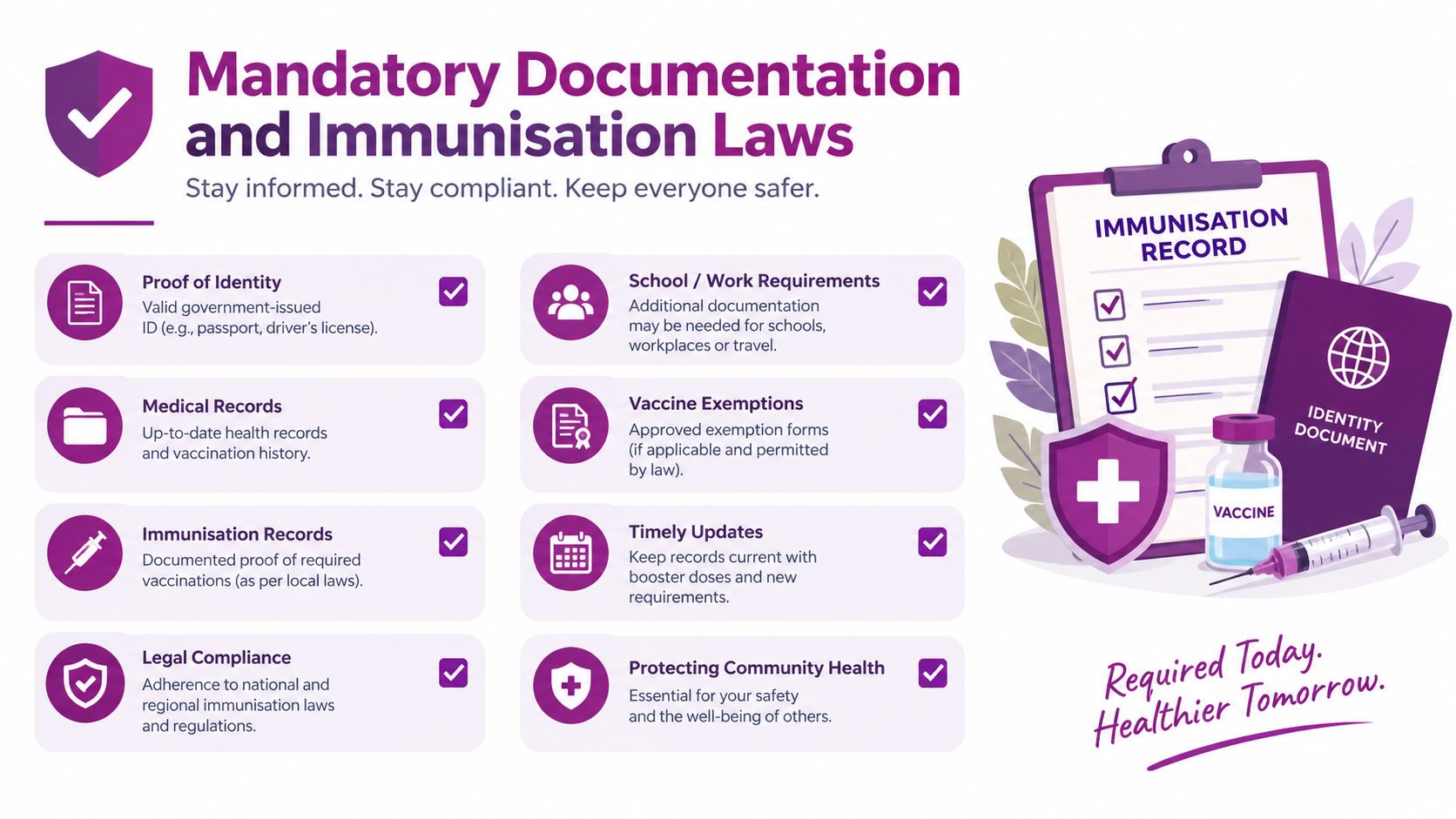
Documentation is not an administrative afterthought. In Victoria, the service must have the right evidence before your child can start, and an incomplete record can delay the confirmation of a place.
The No Jab, No Play law makes immunisation documentation a mandatory condition for confirming enrolment in long day care and kindergarten. Before your child starts, the service must obtain a current Immunisation History Statement issued by the Australian Immunisation Register. Victorian requirements and certificate guidance are summarised by Better Health Channel.
Use the official AIR statement
A record printed by your general practitioner or local council isn't sufficient for enrolment purposes. The required document is the current statement from the Australian Immunisation Register, and it should show that your child is up to date for their age, following an approved catch-up schedule, or covered by a valid medical exemption.
The statement generally needs to be issued or provided within the two months before your child starts at the service. If your child's vaccinations have recently changed, request an updated statement rather than relying on an older document in your household files.
Prepare the rest of the file
A sensible enrolment folder should include:
- Identity evidence: Your child's birth documentation or other accepted identity information.
- Family details: Parent or carer information and current contact details.
- Medical information: Diagnoses, medication instructions, allergies and relevant health plans.
- Additional-needs information: Developmental, disability or support details that help educators prepare appropriately.
- Authorised contacts: Names and contact details for people permitted to collect your child.
- Legal documents: Parenting orders or other documents that affect who can collect or receive information.
Provide sensitive information early and discuss it directly with the nominated enrolment contact. Educators can only plan a safe transition when the centre has the information it needs.
Families can also review the provider's childcare policies and procedures to understand how records, health information and service responsibilities are handled. Keep your own copy of every document you submit, and check that names and dates match across the file.
Activating Your Child Care Subsidy
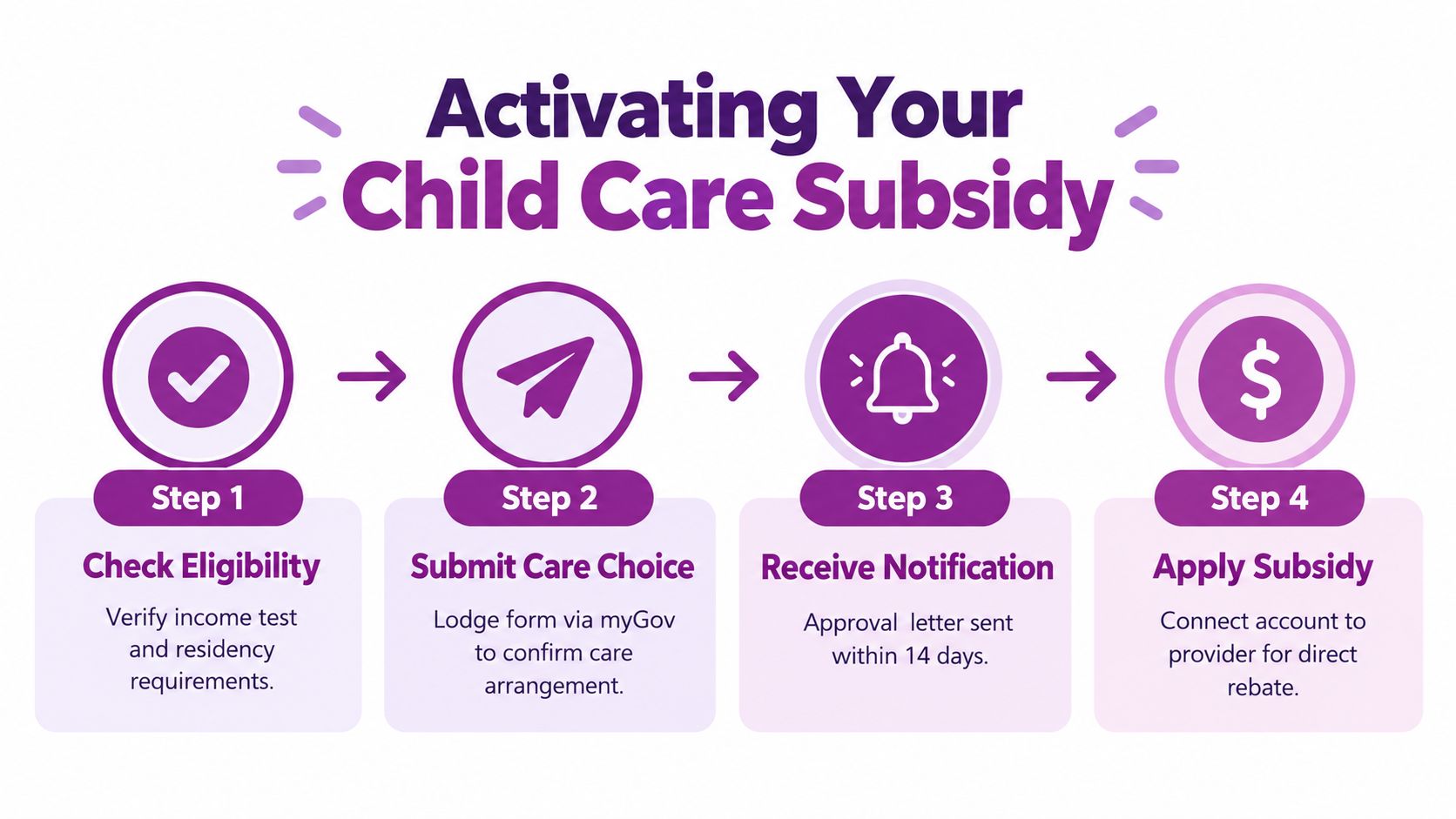
The CCS process has a sequence that parents need to complete themselves. The centre can submit or confirm service-side information, but it can't replace the parent's Centrelink claim or final confirmation.
Complete the Centrelink steps in order
-
Lodge your CCS claim. Use Centrelink through myGov and provide the information requested about your family, residency and care arrangement. The service must be approved, and your child must satisfy the applicable immunisation conditions.
-
Check the care arrangement. Confirm that the booked days and service details in your Centrelink account match what you agreed with the centre. The parent claiming CCS must be liable for fees at the approved service and generally care for the child at least two nights per fortnight or have at least a 14% care share, as described in the government enrolment guidance.
-
Look for the enrolment notification. Once the centre submits its service-side notification, check your Centrelink account rather than assuming the process is finished. Read the details carefully, especially the child, service and care arrangement.
-
Confirm the enrolment. This is the step many families miss. CCS payments don't begin until you confirm the service's enrolment in Centrelink. If the notification is incorrect, contact the centre and Centrelink promptly instead of confirming inaccurate information.
Plan for changes
Families should update the relevant information when care arrangements, residency circumstances or shared-care arrangements change. Don't leave the issue until the next invoice. A change that looks minor to the family may need to be reflected in the government record before the subsidy is calculated correctly.
For a practical budgeting conversation, families can use the Child Care Subsidy estimator. Treat any estimate as planning guidance, not confirmation that CCS has been activated. The only reliable confirmation is the completed Centrelink process and the accepted enrolment details in your account.
The Kids Club ELC Enrolment Journey
At Kids Club Early Learning Centre, the practical enrolment journey starts with the information the service needs to offer a safe, suitable place. Families provide the child's identity and date of birth, proposed start date, expected attendance pattern, parent or carer details, authorised pickup contacts and applicable medical documentation. The centre also requires the Australian Immunisation Register statement and may request a birth certificate or another identity document.

Start with the tour and conversation
A tour is the right time to discuss more than room availability. Parents should ask where infants, toddlers and kindergarten-aged children spend their days, how educators receive information about routines, and what the transition process looks like before the first booked day.
The centres in Springvale South, Dandenong North and Ferntree Gully provide environments for children from six weeks to six years. Dedicated infant and toddler spaces support younger children, while rooms for children aged three to six provide age-appropriate learning environments and preparation for the next stage.
Share information that helps educators respond
The centre uses a Reggio Emilia-inspired approach, with learning experiences built around inquiry, creativity and collaboration. VIT-registered teachers lead the educational program, with weekly professional music and sports curricula included at no extra cost.
That information matters during enrolment because the transition isn't only about submitting forms. Tell educators how your child communicates, settles, eats, sleeps, plays and responds to unfamiliar adults. A child moving from an infant or toddler environment may need a different orientation conversation from a child entering a kindergarten room.
The centre also offers government-funded three-year-old kindergarten and a four-year-old pre-PREP program. Ask how your requested attendance pattern fits the relevant funded program, and keep the government requirements separate from the centre's own orientation and care arrangements.
Navigating Late Applications and Priority Access
Missing an initial application window doesn't automatically mean your child can't obtain a kindergarten place. Victorian funding requirements direct central registration schemes to accept registrations throughout the year, support eligible children including Early Start Kindergarten cohorts, allow families to nominate more than one preferred service, and apply priority-of-access criteria transparently before local allocation rules. These requirements are set out in the Victorian kindergarten central registration and enrolment policy.
Availability still matters, and each council may administer its registration process differently. The right response to a late application is organised action, not waiting for the next annual window.
Ask the council precise questions
If you're moving between councils or have changed address, ask:
- Registration authority: Which council or central scheme manages the application?
- Preferred services: Can your family nominate more than one preferred kindergarten?
- Residency evidence: What proof of residence is required, and when must you provide it?
- Late registration: Can the application be lodged now, even if initial offers have been made?
- Priority categories: Should you disclose disability, developmental delay, complex medical needs or another recognised circumstance?
- Offer process: Does registration place your child in an allocation process, or has a service formally offered a place?
Registration is not the same as an offer. Keep your contact details current, respond to requests for evidence, and tell the council if your preferred service or address changes.
Build a complete late-application file
Have birth details, immunisation information and proof of residence ready. If your child has additional needs, include the relevant information in the way the council requests, because a priority assessment can't be made from information the registration scheme hasn't received.
Families changing services should also tell the current and prospective providers about the move. That prevents confusion around the child's funded kindergarten program and helps each service understand whether the child is transferring, withdrawing or awaiting a new offer.
Common Enrolment Questions Answered
What if my child is on a catch-up immunisation schedule?
Provide the current Immunisation History Statement from the Australian Immunisation Register and tell the service that your child is following an approved catch-up schedule. A GP printout alone isn't the required enrolment record. If vaccinations change during the enrolment period, obtain an updated AIR statement and send it to the centre rather than assuming the previous document remains current.
What happens when parents share care?
CCS eligibility and care arrangements need to reflect the family's actual circumstances. The parent claiming CCS generally needs to care for the child at least two nights per fortnight or have at least a 14% care share. If care is shared between parents, don't guess how the arrangement should be recorded. Provide accurate information through Centrelink and ask the centre to ensure its enrolment details match the arrangement you've reported.
Can my child move from an infant program into funded kindergarten?
Yes, the move still requires careful planning. The service needs to confirm the child's age against the 30 April eligibility rule, check the funded program and attendance pattern, and update the enrolment information. A child can't attend more than one state government-funded kindergarten program at the same time, so notify the relevant service if you're also applying elsewhere.
What if my child has additional needs?
Disclose the information early, including relevant medical, developmental or support details. The centre can then discuss routines, safety planning, communication with specialists and transition arrangements before the start date. Families applying through a council-managed kindergarten scheme should also ask whether the information affects priority access.
Do I need to confirm CCS if the centre has accepted my place?
Yes. Centre acceptance and CCS activation are different processes. Lodge the claim, review the enrolment notification in Centrelink and confirm it before relying on subsidised fees. If you skip that final confirmation, you may need to pay the full fee temporarily.
Kids Club Early Learning Centre offers practical enrolment support, nurturing care from six weeks to six years, and kindergarten programs across Springvale South, Dandenong North and Ferntree Gully. Visit Kids Club Early Learning Centre to discuss availability, prepare your documents and organise the centre and Centrelink steps before your child starts.