
Yes, daycare can be good for infants when care is high quality, stable, and responsive, but the benefits and risks depend on timing, hours, and provider practice. In Australia, 34.9% of parents used regular care for infants, while only about 30% of children under one usually attended care in 2017, showing that infant care is common but still shaped by age and family circumstances (LSAC and AIHW evidence).
At the kitchen bench, a Melbourne parent checks the clock, then checks the eight-week-old asleep in the capsule beside the packed work bag. Returning to work is already a practical puzzle involving milk, naps, transport, and leave. Underneath it sits a more private fear: What if someone else does the loving better than I do?
That question deserves a careful answer, not a slogan. Daycare isn't automatically beneficial, and staying at home isn't automatically easier or healthier. The important questions are whether the care is responsive enough for this baby, whether the educators remain consistent, and whether the hours fit the child's age, temperament, sleep, feeding, and health.
Australian families aren't making this decision at the edge of the early-childhood system. In the March quarter of 2025, 1,479,580 children from 1,060,720 families attended a Child Care Subsidy-approved service, and 49.0% of children aged 0 to 5 used approved care, compared with 42.3% in 2016 (Productivity Commission, Report on Government Services). Centre-based day care is the dominant format, with 59.0% of children in care attending centre-based day care in the March quarter of 2026 (Productivity Commission early childhood data).
Those figures don't tell an individual parent what to choose. They do show that early care for babies is now an established part of Australian family life. The quality of the particular room, the relationship with the educators, and the shape of the weekly routine matter far more than the label “daycare”.
The Honest Answer for Parents Wondering About Infant Daycare
At the kitchen bench in Melbourne, a parent checks the return-to-work date while a baby sleeps nearby. The question is rarely just whether daycare is “good”. It is whether this particular care arrangement can give the baby warm, dependable relationships while allowing the family to work, rest, and manage daily life.
Good infant daycare can support a baby's development and a family's wellbeing. Quality sits inside the word “good”. A small, calm room with familiar educators, flexible feeding and sleep routines, and attentive interaction offers a different experience from a busy service with frequent staff changes and a fixed timetable.
Australian families use care in different ways during a baby's first year. LSAC evidence found regular care for 34.9% of infants, while AIHW reported that about 30% of children under one usually attended some form of care in 2017 (Australian infant childcare evidence). These figures describe varied family arrangements, not a single correct path. A baby attending several days a week and a baby cared for mainly at home can both have thoughtful, responsive care.
What the question should really ask
Ask practical questions about the proposed arrangement:
- Who will care for my baby? Will one or two familiar educators learn the baby's cues, preferences, and settling pattern?
- How long will my baby attend? A gradual start and shorter initial days may feel different from long days from the first week.
- How will the service respond? Will educators notice hunger, tiredness, distress, and the need for quiet, rather than expecting every baby to eat and sleep together?
- How will we communicate? Parents need clear updates about feeds, naps, moods, illness, and the transition home.
A baby can form secure relationships with a parent while also becoming comfortable with other trusted adults. A responsive educator does not take a parent's place. The concern is care that is hurried, inconsistent, or poorly matched to the baby's signals.
A useful rule is simple: judge the everyday interaction, not the brochure. Watch what an educator does when a baby cries, turns away, reaches, or becomes tired.
A Melbourne parent may need care near work, have no available grandparents, or depend on a particular schedule. A centre such as Kids Club Early Learning Centre can be assessed through the same lens: familiar educators, close communication, and routines shaped around each infant. The right choice will not remove every worry. It will turn worry into questions that the service can answer.
What the Research Says About Development in Early Childcare
A Melbourne parent returning to work may be weighing a familiar tension: the baby needs warm, attentive care, while the family also needs a workable routine. Australian research does not support a simple verdict that centre-based care improves every infant or harms attachment and development. The clearer message is that quality changes the outcome. An AIHW review found no strong cognitive or language effect from care in the first three years for children who were not disadvantaged at home when care was high quality (AIHW review of child care and development).
“No strong effect” does not mean “no value”. It means daycare should not be marketed as a guaranteed developmental boost. Nor should it be blamed for difficulties without considering the child's home environment, health, temperament, experiences, and the quality of the service.
How to read the Australian evidence
National reporting helps explain how families use approved early childhood education and care and how centre-based provision fits into the system. Participation figures describe patterns of use. They cannot show that daycare caused one child's developmental result (Productivity Commission child care and education data).
Quality remains the practical question. Australian evidence associates services rated Exceeding the National Quality Standard with lower rates of developmental vulnerability across AEDC domains than services rated Working Towards or Significant Improvement Required (AIHW review of child care and development). A rating cannot describe every conversation, cuddle, meal, or settling attempt. It can, however, prompt parents to examine how a centre works rather than treating every service as equivalent.
International studies, including the NICHD Early Child Care and Youth Development work and research on Quebec childcare policy, help researchers ask about time in care, family circumstances, and differences between services. They do not predict exactly how an Australian baby will respond to one particular room. The material available here does not establish a precise international statistic or one universal causal result.
What research does and doesn't show
| Study | Location | Focus | Key finding |
|---|---|---|---|
| Longitudinal Study of Australian Children | Australia | Infant care participation | Regular care use varies by age, and the cited evidence reports that 34.9% of parents reported regular infant care (LSAC evidence). |
| AIHW evidence review | Australia | Care in the first three years | High-quality care was not associated with strong cognitive or language effects for children who were not disadvantaged at home (AIHW review of child care and development). |
| Productivity Commission reporting | Australia | Participation and service system | Approved care is widely used, and centre-based daycare is a major format (Productivity Commission child care and education data). |
| NICHD and Quebec research | International | Care, hours, and development | These studies help frame questions about time and context, but no additional verified numerical finding is established here. |
The practical conclusion is measured. A good service may give an infant language, play, and social experiences, while home relationships continue to provide a separate foundation. Kids Club Early Learning Centre offers a local example for a Melbourne parent to assess through that lens: examine the infant room, daily practice, and how the service connects care with family life. A child can thrive with care outside the home, while a convenient timetable cannot compensate for inconsistent or unresponsive care.
Attachment and Relationships in Infant Care Settings
A Melbourne parent returning to work may worry that daily daycare will weaken the bond built at home. Attachment does not work like a fixed amount of affection that must be divided between adults. It grows through repeated experiences of being noticed, comforted, and helped back to calm.
A baby cries and an adult responds. The baby turns away and the adult reduces the stimulation. The baby reaches and the adult makes room. Through these ordinary exchanges, the baby gradually learns that trusted people are available and that distress can be managed.
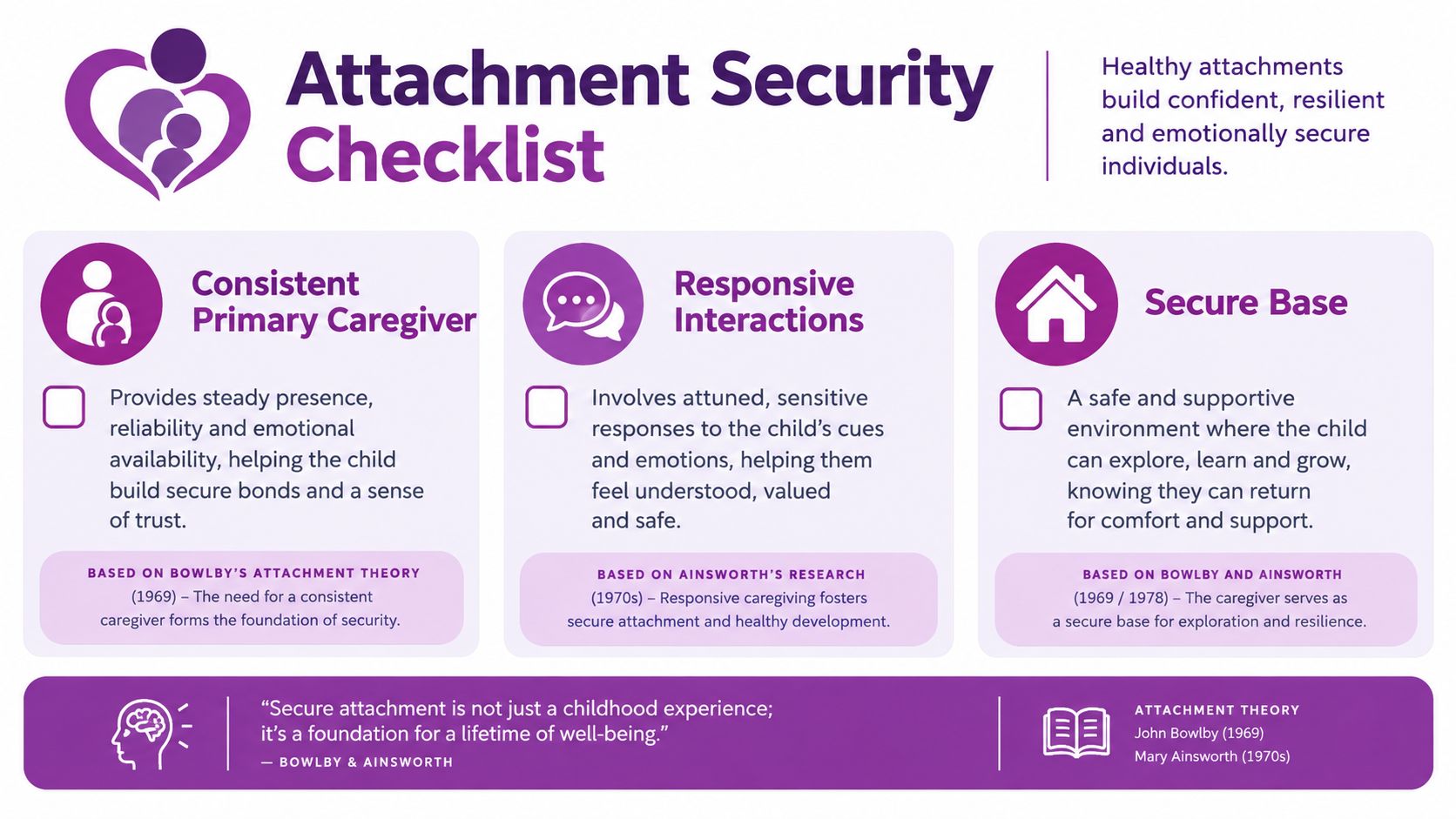
The setting alone does not determine attachment security. Responsive caregiving does. Bowlby and Ainsworth's attachment theory helps explain why consistent, sensitive responses matter. Australian early-childhood guidance also places relationships, secure environments, and responsive interactions at the centre of practice.
What responsive care looks like
In an infant room, quality appears in small moments rather than impressive activities:
- An educator notices a baby looking away and pauses instead of pushing more play.
- A familiar adult talks through a nappy change, waits for the baby's response, and treats the baby as an active participant.
- Feeding follows the baby's cues and family instructions, rather than being hurried to fit a room-wide timetable.
- Sleep arrangements follow safe practice while educators remain alert to each child's tired signs.
- Familiar educators stay involved often enough to learn each baby's expressions, movements, preferences, and ways of settling.
A primary caregiving approach can give a baby a dependable person within the wider service. Small groups and staff continuity also mean fewer unfamiliar handovers. These arrangements do not take the parent's place. They add another reliable relationship while the parent remains central to family life, home routines, history, and ongoing care.
A second relationship is not a replacement
Parents can feel uneasy when an educator becomes warm and familiar. A baby benefits from several adults who respond reliably, while the parent-child relationship remains distinct and connected to the child's wider family experience.
The practical question is whether the service respects what parents know. Educators should ask how the baby feeds, sleeps, signals discomfort, and enjoys connection. Parents should be able to share changes without feeling judged, especially during the first weeks of settling.
At Kids Club Early Learning Centre, a Melbourne family can assess this approach by observing the infant room and asking how educators maintain continuity between home and care. The service's approach to personal and social capability should be visible in everyday relationships, not only in curriculum wording. Eye contact, gentle voices, patient pauses, and clear explanations reveal more about attachment support than a colourful wall display.
Benefits and Real Risks Parents Should Weigh
A Melbourne parent returning to work may face a choice between family logistics, a baby's changing needs, and the reality of finding dependable care. Infant daycare can offer varied experiences and reliable support, while also bringing illness, longer days, and a demanding settling period. The right question is not whether daycare is automatically good or bad. It is whether the particular arrangement fits the baby and the family.
Benefits depend on the daily experience
A responsive educator can turn ordinary care into learning. During a feed, the educator might pause for eye contact, conversation, and the baby's signals. During floor play, they can follow an infant's interest, offer a safe challenge, and describe what is happening. These exchanges support communication and curiosity without formal lessons.
A well-planned infant room can provide regular contact with other babies, several familiar adults, music, outdoor movement, and open-ended resources. For a parent working a full day, that range may be difficult to create alone. The benefit comes from the quality of the interactions, not from the building or equipment. A room can be busy without being responsive, just as a home can offer rich learning through simple routines.
Stable care may also give a child repeated practice with transitions. Familiar greetings, meals, sleep routines, and departures can work like small rehearsals for change. This does not mean every baby will settle quickly or that daycare guarantees an easy move to preschool. It means predictable experiences may help a child build confidence over time.
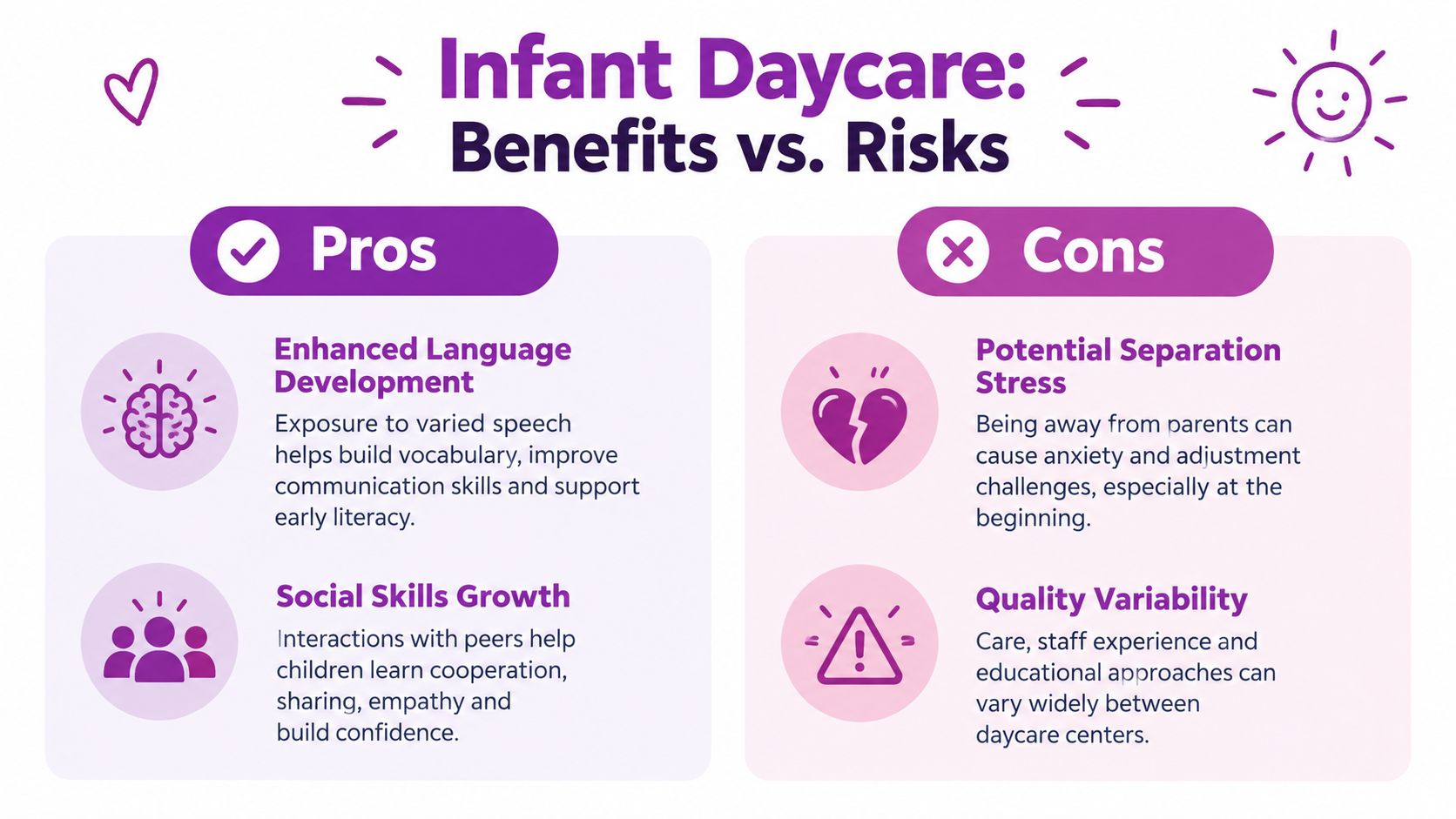
The health cost is real
Australian evidence identifies infection as a significant trade-off in centre-based infant care, particularly when attendance involves longer hours. One analysis reported 2.2 times the odds of low health outcomes for infants in centre-based care attending more than 21 hours per week, and about 1.9:1 odds of acute infections, including gastrointestinal and ear infections, among infants in long day care (Australian childcare health evidence).
For a Melbourne family, this can mean days at home, changed work plans, medical appointments, and a baby who is tired or unsettled. Infection risk does not decide the question by itself. It gives parents practical topics to check: handwashing, exclusion rules, cleaning, ventilation, nappy procedures, and what happens when a child becomes unwell.
Hours matter too. Longer days can increase exposure to group routines and leave less recovery time at home. A gradual start, shorter days where possible, and a clear plan for sick days may make care easier to sustain.
Kids Club Early Learning Centre offers a local example for parents assessing what high-quality infant care should look like. A family can compare its daily practices with their own needs, including hours, group experience, hygiene, staff consistency, and the support available at home. The aim is a workable arrangement, not a risk-free one. Home care also has pressures, and family wellbeing belongs in the comparison.
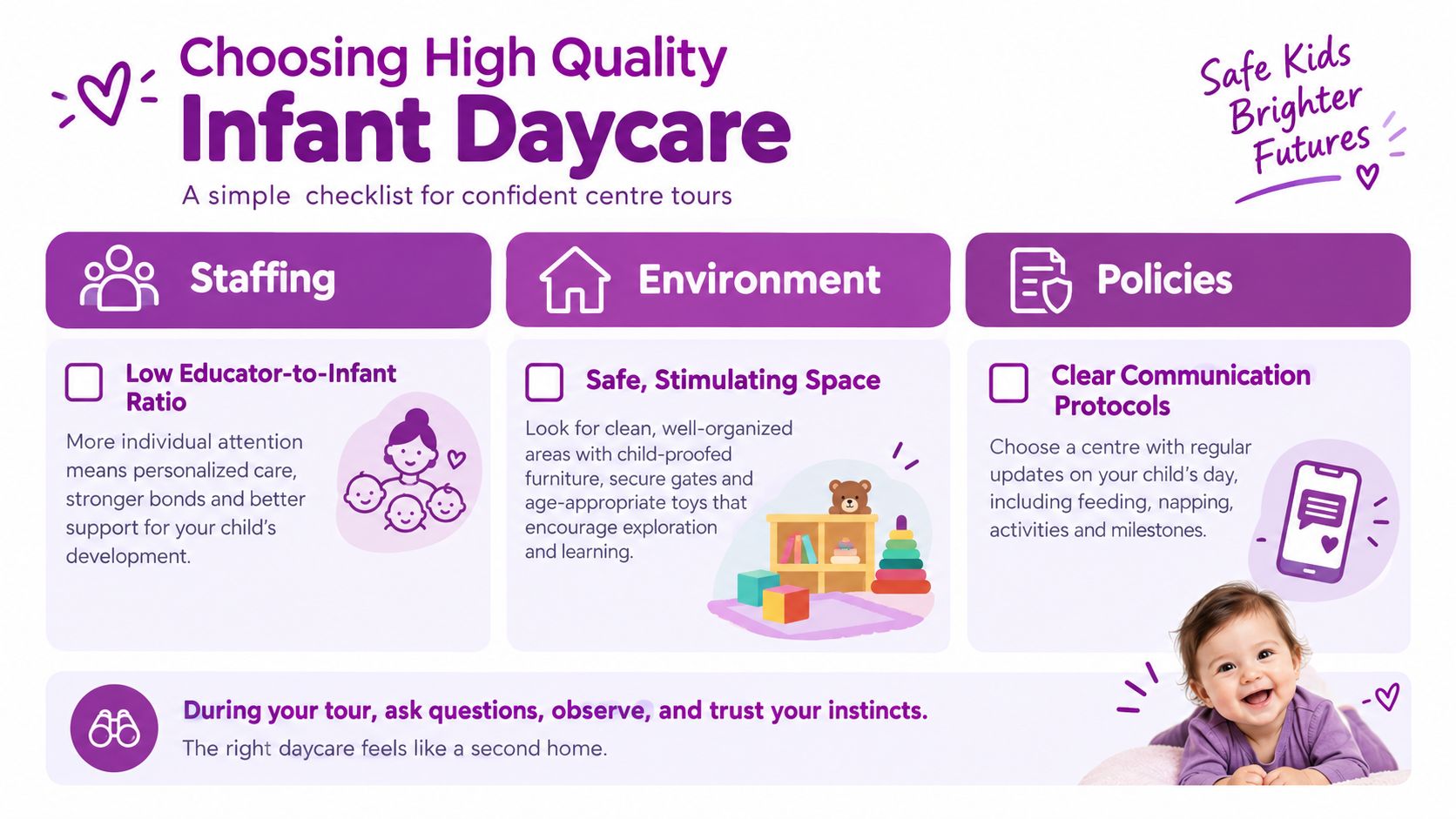
How to Choose High Quality Infant Daycare
A centre tour should feel less like a sales presentation and more like a practical inspection. You're trying to learn what happens when a baby is hungry, tired, frightened, bored, congested, or ready to explore.
Start with people and consistency
Australian regulations set an educator-to-child ratio of 1:4 for children under two. Ask how the ratio works throughout the day, including opening, closing, breaks, and staff absences. A ratio on paper can't tell you whether educators have enough time to hold, talk with, and settle babies.
Ask about qualifications, including Certificate III and Diploma-trained educators, and ask how the service supports ongoing learning. Then ask about staff turnover. A low turnover pattern can support continuity, although a centre should answer transparently rather than offering a vague assurance.
Examine daily practice
Look for evidence that educators adapt the day to babies rather than treating babies as a single group.
- Primary care: Ask which educators will know your baby best and how handovers work when that person is absent.
- Feeding: Find out whether families provide instructions and whether educators follow hunger and fullness cues.
- Sleep: Ask where babies sleep, how safe sleep is managed, and whether the service follows Red Nose safe sleeping guidance.
- Learning: Request examples of written observations or planning that reflect individual interests and development.
- Movement: Check whether babies have safe floor space for crawling, rolling, tummy time, and quiet exploration.
- Communication: Ask whether families receive updates through an app, journal, phone call, or face-to-face conversation.
A clean nappy area matters, but so does the educator's tone while using it. A room can be spotless and still feel emotionally hurried.
Use your eyes during the visit
Watch what happens when a baby cries. Does an educator move close, speak softly, and try to understand the cue? Do educators get down to floor level? Are babies confined for convenience, or do they have safe opportunities to move?
Ask direct questions: “What happens if my baby won't sleep?” “How do you respond when a baby refuses a feed?” “How do you tell parents about an injury or illness?” “Can we begin with shorter visits?”
The answers should be specific. A parent should leave knowing who will communicate, what the routine looks like, and how the service will adjust when the baby doesn't follow the plan.
An infant's first weeks in care often involve tired evenings and uneven naps. Ask how educators and parents will share information so the baby isn't navigating two completely separate worlds.
What Quality Looks Like in a Real Infant Room
The best way to understand quality is to follow a morning.
At arrival, an educator greets the parent and baby by name. The parent shares whether the baby woke early, when they last fed, and whether anything seems different. The educator listens, records the details, and receives the baby slowly rather than treating handover as a quick exchange.
Inside, the room feels organised without being rigid. There are clear spaces for crawling, tummy time, floor play, and quiet retreat. Low shelves hold a small selection of safe, open-ended resources. Natural materials, gentle lighting, and manageable sound help educators notice subtle cues. The room isn't designed to keep every baby busy every minute.
Care happens at the baby's level
An educator sits on the floor with two babies. One reaches for a round toy, while the other watches, then turns towards the educator's voice. The educator waits, narrates the movement, and offers support without taking over. When one baby begins rubbing their eyes, the educator recognises tiredness and adjusts the next transition.
That sequence contains the core of high-quality practice: attention, waiting, language, movement, and individual response. It isn't a performance for visitors. It is the repeated pattern babies experience through feeding, nappy changes, settling, play, and reunion.
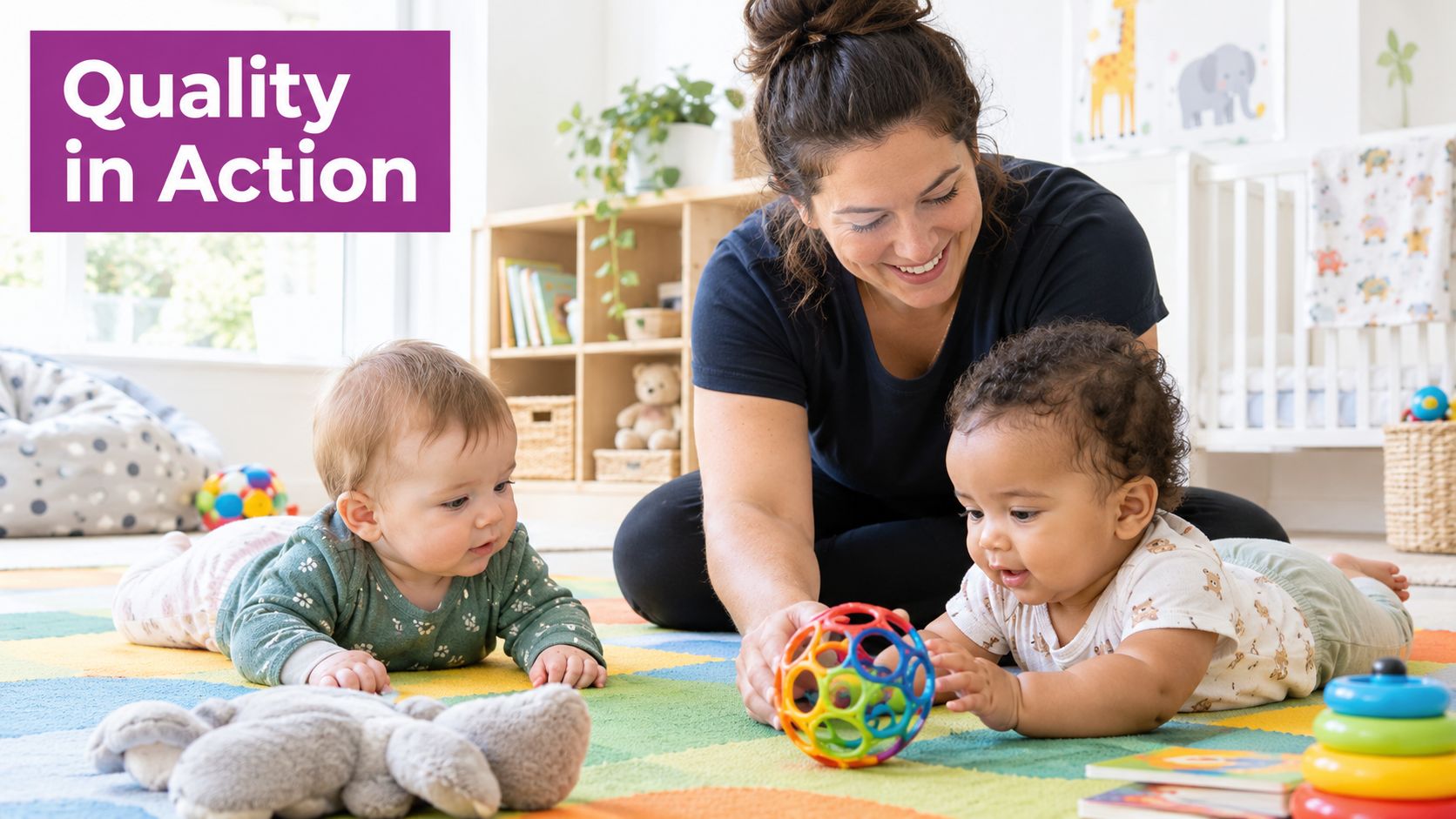
A Reggio Emilia-inspired environment can support this kind of inquiry by treating babies as active participants whose gestures, interests, and movement guide what happens next. At Kids Club Early Learning Centre, dedicated infant and toddler environments, qualified educators, and personalised care provide a local example of how a service might translate those principles into daily practice. Families can ask how the centre's EYLF principles and practices appear in the infant room, rather than relying on the label alone.
Making the Decision That Fits Your Family
There isn't one correct starting age, number of days, or weekly pattern for every baby. A useful decision weighs the baby, the care arrangement, and the household together.
A young baby with a sensitive temperament may need a slower transition and especially consistent educators. Another baby may enjoy a busier room but still need shorter days while sleep and feeding patterns adjust. The family's stress matters too. If care allows a parent to work, rest, and remain emotionally available at home, that benefit belongs in the decision.
Use a three-step filter
First, assess the relationship. Can you identify the educators who'll care for your baby? Do they notice cues, welcome questions, and describe their responses clearly?
Second, assess the exposure. Consider the starting age, days, hours, group size, and likely illness pattern. If the arrangement involves long days, ask whether a gradual introduction or shorter initial sessions is possible.
Third, assess the fit at home. Can you manage collection times, feeding or expressing, backup care, sick days, and the quieter evenings a baby may need during adjustment?
The daycare for infants program at any centre should be judged against those questions, not just its opening hours or room photographs. Ask for a settling plan and agree on how you'll review it.
Review the first month without panic
After the first few weeks, look for patterns rather than one difficult afternoon. Is your baby gradually recognising educators? Do staff explain feeds, sleep, and mood changes? Does the service respond when something isn't working?
A baby may be clingy after collection, sleep differently, or need an earlier quiet evening. Those signs call for conversation, not automatic failure. If the arrangement continues to feel wrong, changing days, educators, or services is an adjustment, not a parenting failure.
High-quality infant daycare can be one part of a secure, healthy early childhood. Choose slowly where you can, ask precise questions, and keep the relationship between your baby, your family, and the educators at the centre of the decision.
Kids Club Early Learning Centre provides dedicated care for children from six weeks, with personalised routines, purpose-built infant environments, qualified educators, and a Reggio Emilia-inspired approach across Melbourne locations including Springvale South, Dandenong North, and Ferntree Gully. Visit Kids Club Early Learning Centre to arrange a tour, meet the infant educators, and discuss a settling plan that fits your baby and return-to-work routine.